
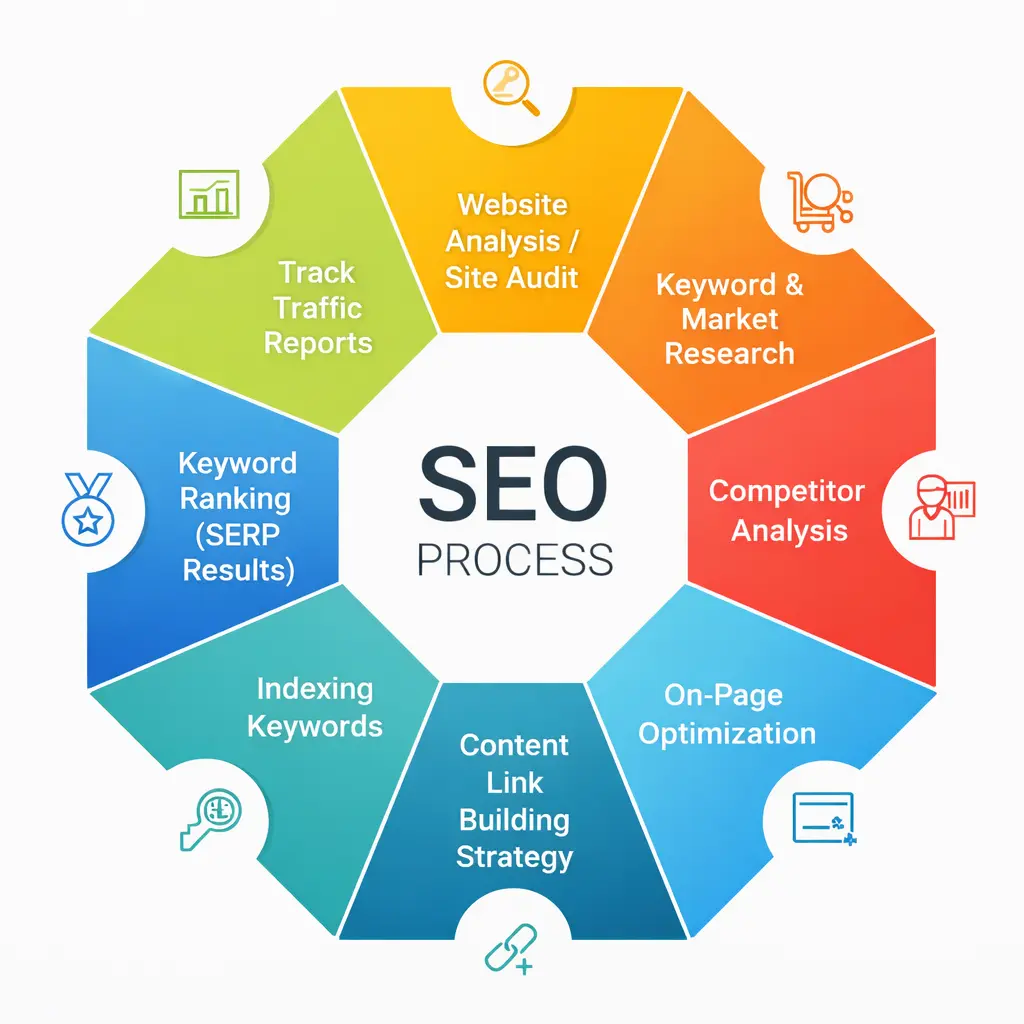
Why On-Page SEO Is Important
On-Page SEO is a core part of search engine optimization that helps search engines and users understand your website content clearly. It focuses on optimizing individual web pages so they rank higher in search results and attract more relevant traffic.
When your on-page SEO is done correctly, search engines can easily understand:
What your page is about
Which keywords you are targeting
How relevant and valuable your content is
How well your page matches user search intent
A well-optimized page leads to:
Higher visibility in search engines
Better user experience and engagement
Improved click-through rate (CTR)
Increased rankings and organic traffic
To learn how Google evaluates web pages, refer to Google’s official SEO Starter Guide.https://developers.google.com/search/docs/fundamentals/seo-starter-guide
Key Elements of On-Page SEO
1. Keyword Research & Placement
Keyword research is the foundation of on-page SEO. Choosing the right keywords ensures your content reaches users who are actively searching for your services or information.
Best practices:
Use the primary keyword in the title, URL, and first 100 words
Add related and long-tail keywords naturally
Avoid keyword stuffing and focus on readability
Proper keyword placement helps search engines understand your page’s relevance.
2. SEO-Friendly Title Tags
Title tags are one of the most important on-page ranking factors and strongly influence click-through rates.
Title optimization tips:
Keep titles under 60 characters
Include the main keyword
Make the title clear, engaging, and user-focused
Example:
On-Page SEO Services | Improve Website Rankings
3. Meta Descriptions
Metadescriptions don’t directly impact rankings, but they play a major role in attracting clicks from search results.
Best practices:
Keep length between 155–160 characters
Include your target keyword naturally
Write persuasive and benefit-driven copy
A strong meta description encourages users to visit your page.
4. High-Quality Content
Content is the heart of on-page SEO. Google prioritizes pages that provide original, helpful, and well-structured information.
High-quality content should:
Answer user questions clearly
Be easy to read and logically organized
Offer real value, not filler text
Be updated regularly
Quality content builds trust, authority, and long-term rankings.
5. Header Tags (H1, H2, H3)
Header tags help organize content and improve readability for both users and search engines.
Proper structure:
H1 for the main page title
H2 for main sections
H3 for subtopics
Search engines use headers to understand content hierarchy and context.
6. Image Optimization
Images enhance user engagement but must be optimized to avoid slowing down your site.
Image optimization tips:
Use descriptive file names
Add ALT text with relevant keywords
Compress images for faster loading
Optimized images improve page speed and accessibility.
7. URL Optimization
SEO-friendly URLs are short, clean, and easy to understand.
Example:
 yoursite.com/page123?id=45
 yoursite.com/on-page-seo-services
Keyword-rich URLs perform better in search results.
8. Internal Linking
Internal linking improves site navigation and helps search engines crawl and index your pages more effectively.
Benefits:
Distributes page authority
Improves indexing
Increases time spent on site
Use relevant anchor text when linking between pages.
9. Mobile Optimization
Most users browse websites on mobile devices. Google uses mobile-first indexing, making mobile optimization essential.
A mobile-friendly website:
Improves rankings
Enhances user experience
Reduces bounce rates
10. Page Speed Optimization
Page speed is a confirmed Google ranking factor. Slow websites lose users and rankings.
Ways to improve speed:
Compress images
Use fast and reliable hosting
Minimize CSS and JavaScript files
Our On-Page SEO Services
At abhiram.kp, we provide complete on-page SEO solutions designed to improve rankings and conversions.
Our services include:
Keyword research and optimization
Content optimization
Meta tags and heading optimization
Image and page speed optimization
Technical SEO support
Conclusion
On-Page SEO is the backbone of successful digital marketing. When implemented correctly, it improves search visibility, enhances user experience, and drives consistent organic growth.
If you’re looking for professional on-page SEO services, our team is ready to help you dominate search results and grow your online presence.
wonderfull amazing