
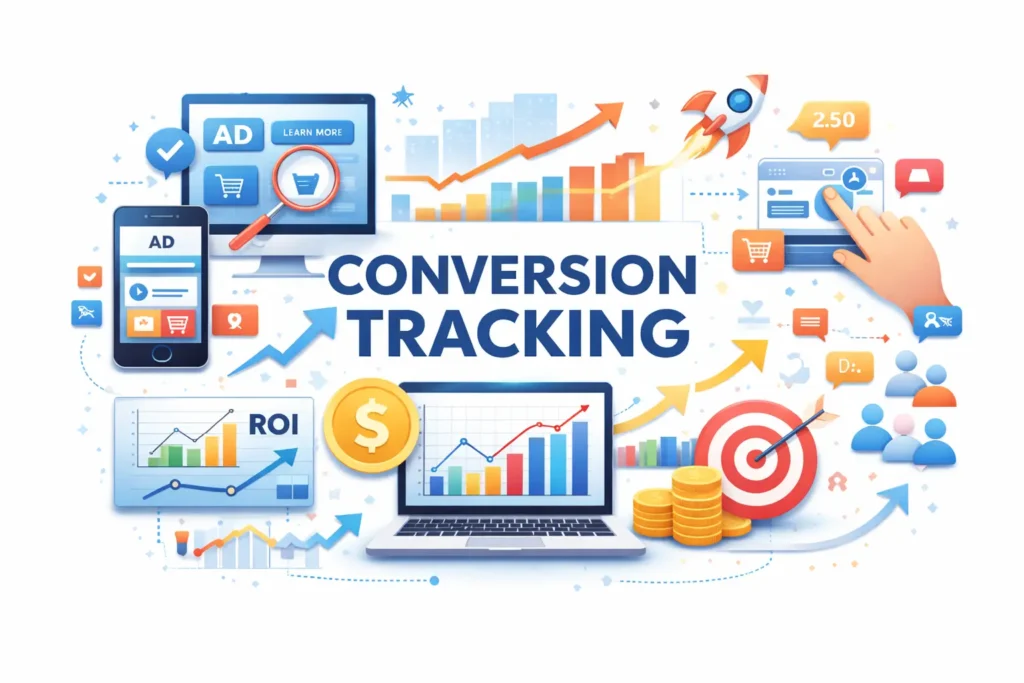
What Is Conversion Tracking?
Conversion tracking is the process of monitoring specific actions users take after interacting with your digital marketing campaigns. These actions, known as conversions, may include:
Website purchases
Lead form submissions
Phone calls
App installs
Newsletter sign-ups
WhatsApp messages
By monitoring these actions, businesses can clearly understand how users engage with ads and websites, helping measure true campaign effectiveness.
Learn how tracking improves ad performance in our guide on
Google Ads Optimization
Why Conversion Tracking Is Important
Without proper tracking, digital marketing becomes guesswork. When performance data is accurately collected, businesses gain clear insights into what is working and what needs improvement.
Key Benefits
Measure campaign performance accurately
Improve ROI and reduce wasted ad spend
Identify high-performing ads and audience segments
Optimize campaigns using real data
Make smarter, data-driven marketing decisions
These insights allow marketers to focus budgets on strategies that deliver real results. External DoFollow: https://support.google.com/analytics/answer/10089681
Platforms That Support Tracking
Action tracking can be implemented across multiple platforms, including:
Meta Ads (Facebook & Instagram)
Google Analytics (GA4)
Google Tag Manager
E-commerce platforms like Shopify and WooCommerce
Each platform offers valuable insights when tracking is configured correctly.
Types of Conversions You Can Measure
1. Website Actions
Track form submissions, page views, scroll depth, and button clicks.
2. E-commerce Actions
Monitor purchases, cart value, product performance, and checkout behavior.
3. Lead Actions
Measure leads generated from contact forms, WhatsApp clicks, or call buttons.
4. App Actions
Track installs, in-app events, and user engagement.
How Tracking Works
A tracking code (pixel or tag) is added to your website or app
Users interact with ads or content
The system records actions as completed goals
Data appears in analytics and ad dashboards
Campaigns are optimized using this information
This process helps marketers make informed decisions based on actual user behavior.
Tracking for Ads Optimization
When tracking is active, advertising platforms automatically:
Focus on users more likely to convert
Improve ad delivery using machine learning
Reduce cost per action over time
Increase overall campaign efficiency
This makes proper tracking essential for performance-focused marketing.
Common Mistakes to Avoid
Incorrect tag or pixel installation
Tracking irrelevant or wrong events
Missing key goals
Not testing the setup
Ignoring insights from reports
Avoiding these mistakes ensures accurate data and better results.
Why Your Business Needs This
Whether you run a local business, service company, or e-commerce store, tracking user actions helps you:
Understand customer behavior
Scale profitable campaigns
Increase leads and sales
Stay ahead of competitors
It transforms marketing efforts into measurable, scalable growth.
Final Thoughts
Tracking user actions is the backbone of successful digital marketing. It brings clarity, control, and confidence to decision-making. By measuring the right actions and optimizing campaigns accordingly, businesses can achieve higher ROI and long-term growth.
If you’re looking for expert help with setup, Google Ads, or Meta Ads optimization, our digital marketing team is ready to help you grow 